

80 Years of Supporting the Chemical Sciences
The 80th anniversary of the Camille and Henry Dreyfus Foundation provides a unique opportunity to share the story of the Dreyfus brothers and their continuing impact, not only through the Foundation’s ongoing work to support the chemical sciences, but through their own innovations and advances in chemistry.
We invite you to look back with us, before the birth of the Foundation 80 years ago, and learn about the lives of two brothers, Camille and Henry Dreyfus.
Born at a Time of Rapid Transformation
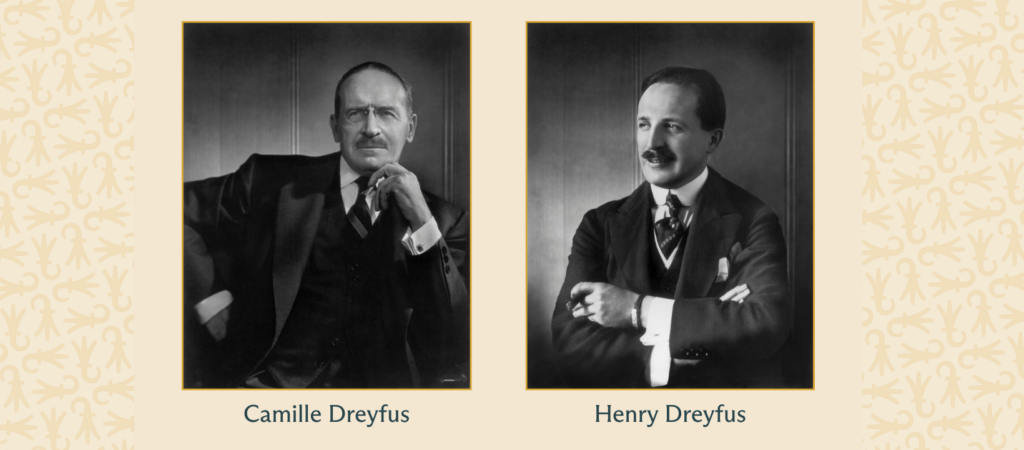
Camille (1878-1956) and Henry (1882-1944) were born to Jewish parents, Abraham and Henrietta Dreyfus. The Dreyfus family lived in Basel, Switzerland, known as the global center of the dye industry, and Abraham was a banker involved in the chemical industry.
The brothers were born during a time characterized by major changes in geopolitics, technology, and culture. The balance of world powers had begun to shift after the Franco-Prussian War, the American Civil War, and the creation of Germany. The Industrial Age had begun in earnest. Inventions like the telephone, phonograph, and lightbulb, and an explosive growth of the railroad network, pushed many parts of the world into a new era that Mark Twain defined as The Gilded Age.
Education and Interest in Cellulose Acetate
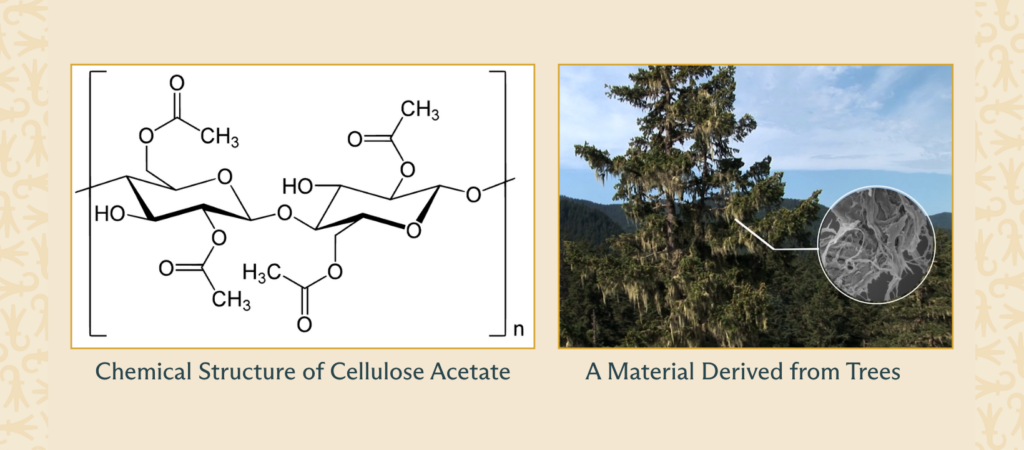
Against this transformative backdrop, Camille and Henry attended the University of Basel. In 1901 and 1904, respectively, they earned their PhDs in chemistry with the highest honors. The brothers later studied at the École de Pharmacie at the Sorbonne in Paris. There, they became fascinated with a little-understood material called cellulose acetate, derived from wood pulp, and its potential application across many fields.

They knew that cellulose acetate could be leveraged optimally only if they could develop a process to manufacture it commercially. They began experimenting in a small laboratory in the backyard garden belonging to their father, Despite limited resources, the brothers were brimming with enthusiasm, conducting more than 20,000 experiments between 1910 and 1921. As Camille would later say, “I saw the adventure of finding out new things.”
Early Breakthroughs
Those experiments eventually yielded extraordinary results. First was a process for manufacturing nonflammable acetate-based film, which represented a staggering leap ahead for the young photography and motion-picture industries. Until the brothers introduced their invention, the industry was using cellulose nitrate film, which would often burst into flames and seriously injure projectionists working in early movie houses. This new film was adopted widely by the burgeoning film industry, including Pathé Frères, the largest film equipment company in the world at the time. The first patent application by Camille was filed in 1911, but it would not be the last. Subsequently, more than 225 patents were issued to him, and more than 100 to Henry.

The brothers’ research fundamentally changed contemporary scientists’ understanding of cellulose acetate. They were the first to realize the importance of the acetyl content of cellulose acetate as it affects the properties of the material, and showed that viscosity, high tensile strength, and elasticity are complementary. They also discovered how to avoid cellulose degradation, long before the polymeric nature of cellulose was discovered many years later.
With this new knowledge in hand, the brothers set their sights on something even bigger: the production of a cellulose acetate fiber. That dream was put on hold as the world entered a global conflict.
Contributions to the War Effort
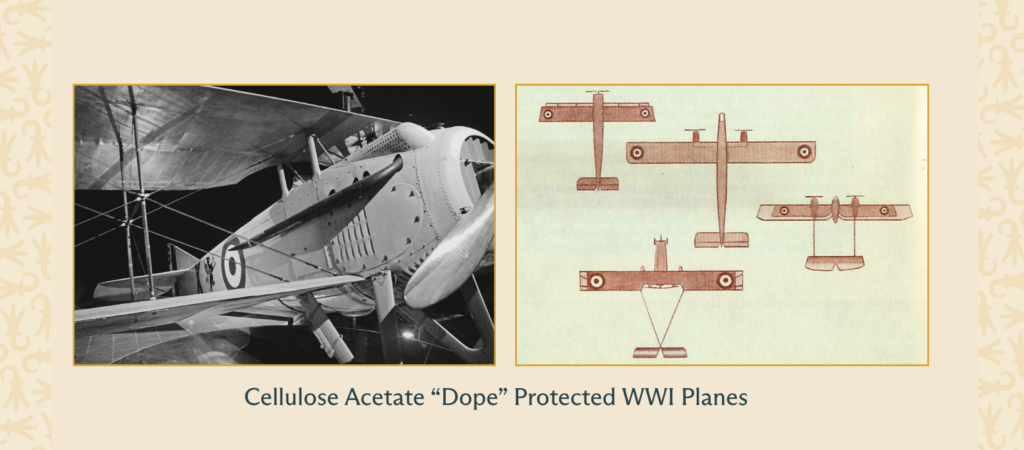
Camille and Henry moved to London during World War I at the invitation of the British government, where their work on cellulose acetate production proved essential to the war effort. The material was uniquely suited for preserving the fabric of airplane wings, creating a coating called “acetate dope” that imbued the wings with critical characteristics: tautness, resilience, waterproofing, and nonflammability. During the war, aircraft used by England, France, Italy, and the US were all fortified by “dope” produced by the brothers in the factory they’d built in Spondon, England.
In 1917, US Secretary of War Newton Baker asked Camille and Henry to establish manufacturing in America. The brothers accepted the invitation and built the first commercial plant for producing cellulose acetate in Cumberland, Maryland. In recognition of their service, which saved the lives of countless pilots, France made both brothers officers of the Legion d’Honneur, the country’s most prestigious order of merit.
Perfecting a Synthetic Fabric
After the war, the brothers returned to the laboratory and continued their numerous experiments, refocusing on the production of synthetic fibers. They were certain, as Camille said, that “man could make a better fiber than nature.”
The journey toward success was met with many obstacles, but that did not deter the brothers. As Camille noted, “The more troubles we had, the more we were successful-because we grew up on troubles and had learned to master them.” The industry standard for spinning synthetic fibers at the time, “wet spinning,” could be improved, they thought. So, they invented an entirely new process. By spinning downwards from a multihole jet into narrow columns, it allowed a longer drying length of filament in the spinning machine and permitted the filaments to be taken outside the spinning columns when substantially dry, then wound on bobbins. Called “Downward dry spinning,” this new process made manufacturing faster and more cost-efficient. When the brothers realized this method could not be used in traditional knitting and weaving machinery, they built their own production equipment to support it.
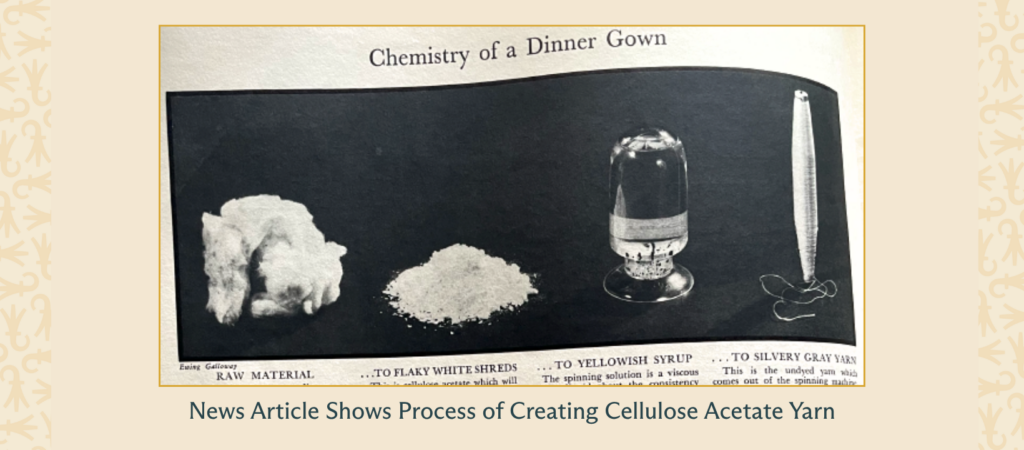
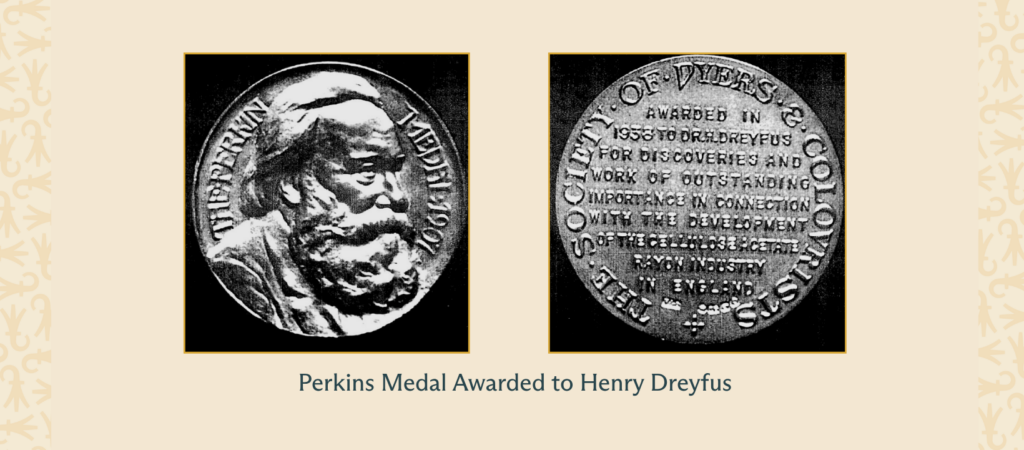
One major obstacle remained: although the fibers could now be manufactured efficiently, they could not be dyed using conventional methods. With the aid of an army of experienced manufacturers as consultants, the brothers invented an entirely new series of insoluble dyes, finely dispersed in oil, which Henry called “one of the brightest pages in the history of the dyeing industry.” For his work on dyes, Henry was awarded the Perkin Research Medal in 1938, the highest honor from the Society of Dyers and Colourists of Great Britain. He accepted the Medal on behalf of both himself and his beloved brother Camille.
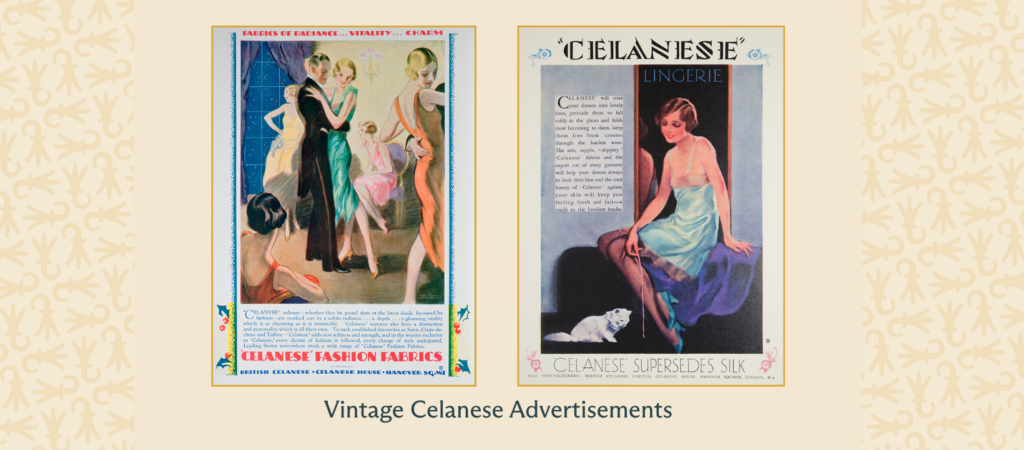
From these innovations, the brothers produced a synthetic silk which was non-flammable, dyeable, strong, and economical to produce. They named this brand-new material Celanese, a combination of cellulose and the feeling of comfort and ease one would have by wearing the fabric.
Later Years and Legacy
These efforts led to the birth of the Celanese Corporation in the 1920s, which manufactured and distributed Celanese around the world. Camille remained in the US to build the Celanese Corporation of America, housed at the Cumberland, Maryland plant, while Henry returned to England to run British Celanese Ltd.
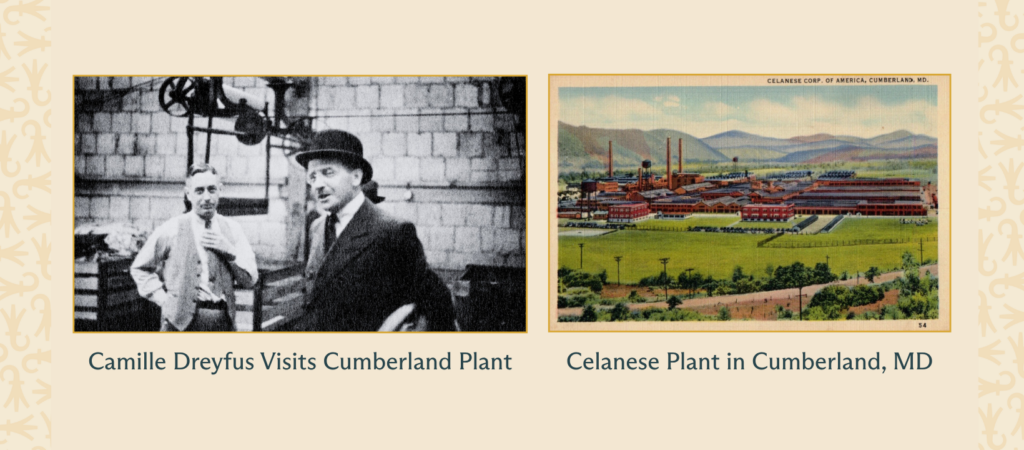
Both brothers were involved in every element of the company, and Camille was known to be an especially talented marketer. He insisted on setting Celanese apart as a luxury fabric, distinguishing it from other synthetic fibers, including rayon, which were seen as cheap. He was often seen walking up Fifth Avenue to visit apparel buyers with a bundle of Celanese under his arm. The strategy proved remarkably successful. Today, Celanese Corporation has 25 production plants and six research centers in 11 countries, a testament to the success of the brothers’ pioneering scientific discoveries and sharp business acumen.
While the brothers remained physically separated for most of the rest of their lives, they were incredibly close and phoned each other daily. After Henry’s death in 1944, Camille established the Dreyfus Foundation as a memorial to his brother. The Foundation became a memorial to both men after Camille Dreyfus died in New York in 1956.